The Great Annual Wildebeest Migration is one of few spectacles on earth that transcend travel and become something altogether more profound. It is not merely a safari experience or a wildlife event, but one of the planet’s last great natural phenomena. This natural occurrence unfolds across the endless plains of East Africa with a scale, drama, and authenticity that no human production could ever hope to recreate.
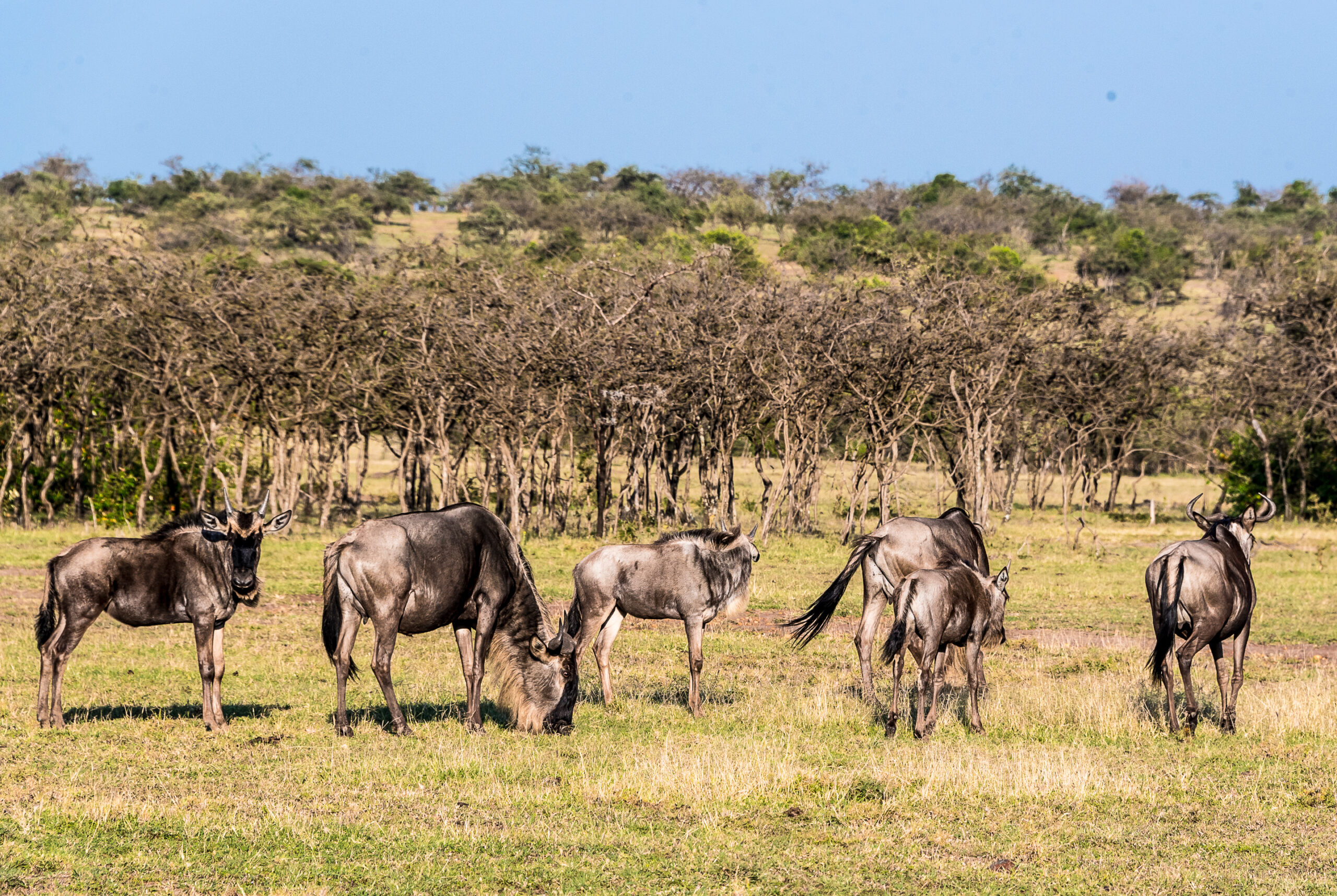
Every year, more than two million wildebeest, accompanied by hundreds of thousands of zebras and gazelles, embark on an extraordinary circular journey between Tanzania’s Serengeti and Kenya’s Maasai Mara. Driven by ancient instincts and the pursuit of fresh grazing, they traverse nearly 1,000 km through landscapes teeming with predators, crossing crocodile-infested rivers and vast open savannahs where survival is decided every single day.
For you, however, the Great Annual wildebeest Migration is far more than witnessing an impressive number of animals. It is an invitation to experience Africa in its purest and most untamed form, where every sunrise promises an entirely new story and every game drive offers the possibility of witnessing history unfold before your eyes.
Unlike destinations defined by monuments or cities, the migration can never be replicated. It cannot be scheduled with certainty or choreographed for visitors. It belongs solely to nature, making every encounter deeply personal and entirely unique.
A Living Symphony That Never Repeats Itself
What makes the Great Wildebeest Migration extraordinary is not simply its immense scale, but its constant evolution. No two days are alike and no two seasons unfold in exactly the same way.
Although rainfall patterns greatly influence grazing grounds, the predator movements also play a role in altering migration routes. River crossings happen unexpectedly, sometimes within minutes, while at other times vast herds gather for hours before one courageous wildebeest makes the first leap into rushing waters.
Those who have visited and witnessed the migration several times quickly discover that each safari tells an entirely different story. One year may present dramatic Mara River crossings where thousands of wildebeest surge through powerful currents under the watchful eyes of enormous Nile crocodiles. Another season may offer the unforgettable sight of newborn calves taking their very first steps during the calving season across the southern Serengeti, where more than half a million calves are born within a matter of weeks.
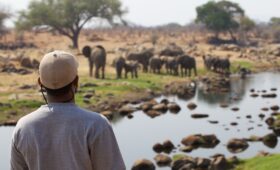
Some return to witness extraordinary predator interactions as lions, cheetahs, leopards, hyenas, and wild dogs capitalize on nature’s abundance. Others return for quieter moments: golden sunsets illuminating endless columns of wildlife stretching beyond the horizon, elephants walking peacefully alongside migrating herds, or the unmistakable silence that settles after an evening storm across the plains. Nature ensures that no safari is ever a repeat performance.
Following an Ancient Rhythm Across East Africa
The Wildebeest Migration is often described as a journey, yet it is more accurately a continuous cycle that has existed for thousands of years.
The year begins in the nutrient-rich grasslands of southern Serengeti and the Ndutu region, where the rains transform the plains into a vast nursery. Between January and March, hundreds of thousands of calves are born, often within just a few weeks. This remarkable concentration of life attracts an equally remarkable concentration of predators, creating one of Africa’s most captivating wildlife spectacles.
As the grasses begin to dry, the herds gradually move northwest through the central Serengeti before gathering around the Western Corridor. Here, the Grumeti River presents one of the migration’s earliest natural obstacles, where giant crocodiles wait patiently beneath the surface.
By July, the migration reaches its most iconic chapter as enormous herds approach the Mara River along the Kenya-Tanzania border. These crossings have become synonymous with the Great Migration itself. Thousands of animals crowd the riverbanks before instinct finally overcomes hesitation. The resulting surge is one of the most breathtaking wildlife events anywhere in the world, a dramatic collision of courage, instinct, and survival.
From August through October, the Maasai Mara offers exceptional wildlife viewing as vast herds spread across rolling grasslands, pursued by some of Africa’s highest concentrations of big cats. When seasonal rains return to Tanzania, the ancient cycle begins once again as the herds move south toward the Serengeti, guided by instincts older than civilization itself.
Luxury Beyond Accommodation
For those accustomed to the world’s finest hotels, private islands, and exclusive retreats, luxury increasingly lies not in extravagance alone, but in rarity. The Great Migration offers something no architect, designer, or concierge can create. It offers unpredictability.
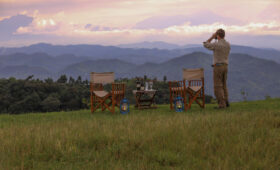
Luxury during the Migration means enjoying breakfast beside a river while listening to distant wildebeest calls echo across the valley. It means boarding a private vehicle at dawn with an expert guide who understands animal behaviour accumulated over decades in the bush. It means watching a leopard descend from an acacia tree while no other vehicle is within sight. It means arriving at an elegant safari camp where exceptional cuisine, world-class wines, and refined hospitality exist in perfect harmony with untouched wilderness.
As evening falls, lanterns illuminate beautifully appointed suites overlooking landscapes where lions roar into the darkness. The absence of city lights reveals an astonishing canopy of stars, reminding even the most seasoned traveller how rarely modern life allows us to truly disconnect. This is luxury stripped of unnecessary excess and replaced with something infinitely more valuable: authenticity.
Why You Will Return Again and Again
Many extraordinary destinations are visited once, but the Great Annual Wildebeest Migration inspires lifelong return journeys.
Those who witnessed the calving season often return to experience the dramatic river crossings. Those captivated by Kenya’s Maasai Mara frequently return to explore Tanzania’s endless Serengeti plains. Others seek different months, different landscapes, different photographic opportunities, or simply the privilege of seeing nature write a completely different story.
Some choose to follow the wildebeest migration over multiple destinations within a single journey, flying between luxury camps positioned precisely where wildlife activity is unfolding. Others return with family, eager to introduce children and grandchildren to one of the world’s last truly wild ecosystems.
Even seasoned safari enthusiasts acknowledge that no amount of previous experience diminishes the excitement of hearing a guide quietly announce, “They are crossing.” Those words still quicken the pulse because nobody knows exactly what will happen next.
A Photographer’s Dream and a Storyteller’s Paradise
The Great Wildebeest Migration provides extraordinary opportunities for photography, whether using professional equipment or simply capturing unforgettable moments on a smartphone.
Golden light spills across thousands of moving animals and dust clouds create dramatic silhouettes against crimson sunsets. Lions emerge from tall grasses with astonishing stealth. Elephants walk through migrating herds with quiet confidence while hot air balloons drift silently above the plains at first light. Every frame becomes part of a story that cannot be recreated.
Despite these amazing moments, many discover that their most treasured memories are not photographs at all. They are the sounds, the thunder of thousands of hooves across open plains, the distant call of hyenas after sunset, the splash of a river crossing, and the profound silence that follows.
Conservation Through Meaningful Travel
Experiencing the Great Migration also carries deeper significance.
Luxury tourism plays an essential role in protecting one of earth’s most remarkable ecosystems. Responsible safari operators, conservation organisations, and local communities work together to safeguard wildlife habitats while creating sustainable livelihoods that benefit future generations.
Every thoughtfully planned safari contributes to preserving these landscapes so that the wildebeest migration continues its timeless journey for decades to come. For many travellers, this transforms their safari from an exceptional holiday into a meaningful investment in one of the world’s greatest natural treasures.
The Privilege of Witnessing the Extraordinary
The Great annual Wildebeest Migration is an experience that change the way we view the world. To be at the edge of the Mara River as thousands of wildebeest gather in anticipation, to watch predators and prey participate in an ancient cycle that has unfolded for generations, and to witness nature operating entirely on its own terms is to experience something increasingly rare in our modern world.
This is not simply another destination to visit or another item to cross off a bucket list. This is a reminder that true luxury is measured not only by comfort or exclusivity, but by access to moments that very few people will ever experience. Perhaps, this is why so many distinguished travellers return. Not because they have seen the Great Migration before, but because they know they never truly have.
Every season is different, every crossing tells a new story, and every safari becomes another chapter in Africa’s greatest masterpiece.